Footwear Hygiene Is One of the Last Uncontrolled Variables in Contamination Control
April 8, 2026
By Patho3Gen Admin
We Make It Measurable, Repeatable, and Auditable
In controlled environments, footwear hygiene is often treated as a procedural step, not a validated control point.
For many pharmaceutical and clean manufacturing facilities, the default approach remains:
disposable shoe covers
adhesive mats
informal or manual practices
These methods are familiar, but they introduce variability, recurring cost, and limited verification.
As expectations rise around Contamination Control Strategy (CCS) under EU GMP Annex 1, facilities are being asked a more direct question:
Are current footwear practices controlling risk, or simply managing perception?
The Footwear Hygiene Gap
Footwear continuously interacts with the most contaminated surface in the facility, the floor, while moving through:
gowning rooms
airlocks
corridors
production areas
Yet footwear hygiene is often:
non-standardized
dependent on human behavior
difficult to verify
This creates a gap between intended control and actual control.
Where Traditional Approaches Fall Short
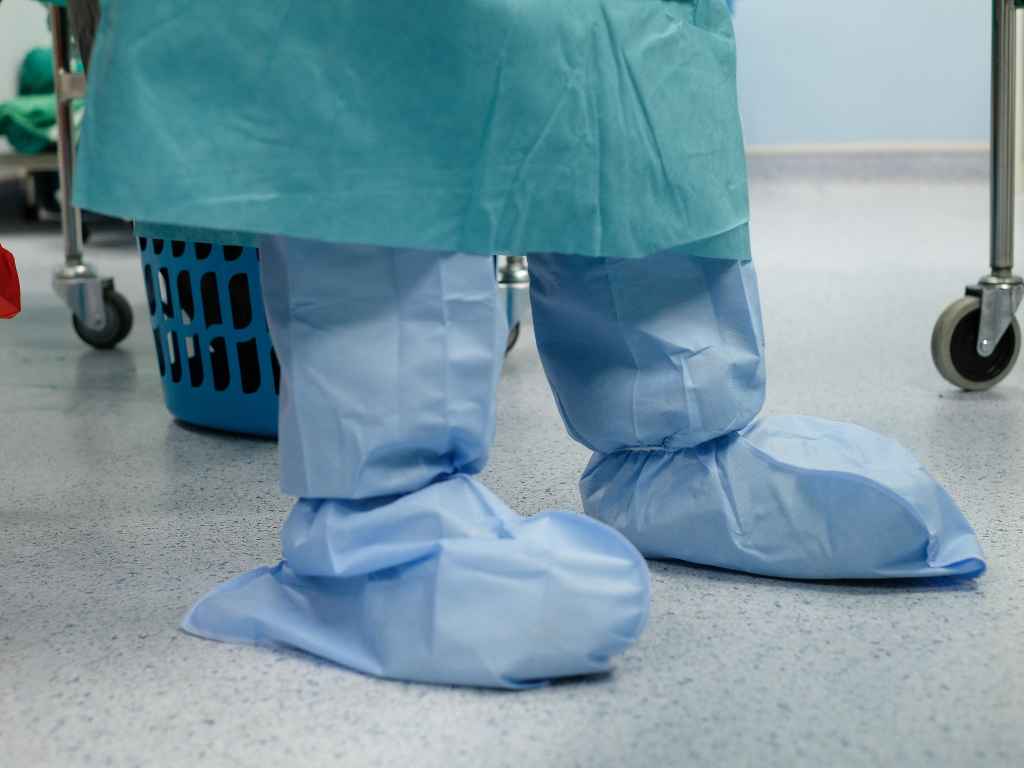
Shoe covers act as a barrier, but not a decontamination step. They provide no intrinsic microbial reduction, introduce contamination risk during donning, and generate ongoing consumable costs and waste.
Manual processes introduce variability through inconsistent use, incomplete coverage, and differences between shifts.
Most importantly, traditional methods lack measurable performance. Facilities often cannot answer:
What reduction is achieved?
Is the process repeatable?
Can performance be validated or trended?
Without this, footwear hygiene remains outside a data-driven CCS framework.
Footwear also serves as a transport mechanism between zones, increasing the risk of cross-contamination despite otherwise robust controls.
A Shift to Infrastructure-Level Control
Modern contamination control is moving from procedural dependence to engineered consistency.
The UVZone Shoe Sanitizing Station introduces a standardized hygiene step at key transition points such as gowning entry, airlocks, and zone boundaries.
What Changes with an Automated Approach
Consistency by Design
Fixed-duration cycles ensure identical, repeatable sanitation every timeVerifiable Performance
Demonstrated multi-log microbial reductions up to 5.16-log in seconds support validation and audit discussionsReduced Consumables
Eliminates reliance on shoe covers, mats, and chemical baths, supporting cost and sustainability goalsImproved Workflow
Hands-free operation integrates into personnel flow without slowing operationsReinforced Zone Control
Aligns physical movement with contamination control strategyStronger Audit Position
Provides repeatable, documented, and defensible hygiene practices
Footwear Hygiene as a Control Point
For QA, bioburden control, and manufacturing leaders, the question is no longer whether footwear can carry contamination.
The question is:
Should footwear hygiene be treated as a defined, verifiable control within your CCS?
As expectations continue to rise, facilities are prioritizing solutions that are:
consistent
measurable
auditable
sustainable
Footwear hygiene has long been a secondary consideration. But in controlled environments, where variability is the enemy of control, that approach is changing.
The UVZone Shoe Sanitizing Station transforms footwear hygiene from:
a variable practice to a defined, repeatable control
For facilities strengthening their contamination control strategy, this is not just a technology upgrade, but a shift toward more defensible, system-level risk management.